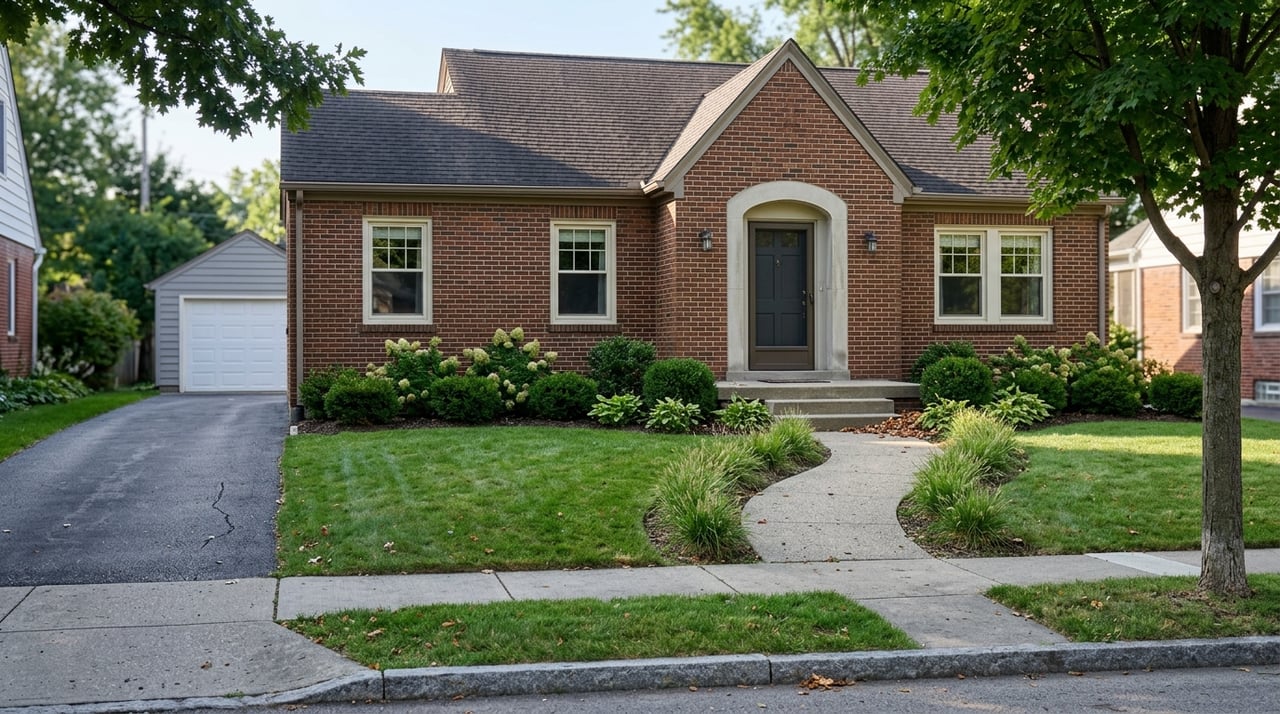
Looking for classic Detroit brick homes without core-neighborhood pricing? Upper Eastside is worth a closer look. If you are comparing East English Village and Cornerstone Village, you are likely balancing home style, budget, parks, and day-to-day convenience. This guide breaks down what makes each area distinct, how the housing stock differs, and what kind of lifestyle you can expect so you can shop with more clarity. Let’s dive in.
Why buyers look at Upper Eastside
Upper Eastside is a useful name for buyers, but the City of Detroit often frames this area through the East Warren/Cadieux neighborhood plan. That plan covers East English Village, Cornerstone Village, and nearby Morningside, with a focus on blight reduction, home rehabilitation, safer sidewalks, park connections, and new shops and mixed-use development along East Warren.
That planning context matters because it helps explain the feel of the area. Rather than reading as one single district, this part of the east side functions more like a collection of residential blocks connected by an improving commercial corridor and shared community assets.
East English Village at a glance
East English Village is the more architecturally established of the two neighborhoods. According to the neighborhood association, development began in 1913, and many of its brick homes were built from the early 1930s through the 1950s.
One thing buyers often notice right away is the variety. Many homes were custom-built rather than developed as one uniform subdivision, which can create more range in façade details, lot layouts, and house styles from block to block.
What the housing feels like
If you like older Detroit homes with character, East English Village may stand out. You will often see brick construction, established streetscapes, and a more consistent sense of architectural identity than in some nearby areas.
That does not mean every house looks the same. The appeal here is often in the mix of details, from exterior design touches to different floor plans and lot treatments that give each block its own rhythm.
Cornerstone Village at a glance
Cornerstone Village offers a different kind of value. The city’s neighborhood channel describes it as the easternmost corner of Detroit’s east side, with 1,247 homes and a neighborhood history tied to resident organizing that dates back to 1977.
For many buyers, Cornerstone Village feels more mixed in housing style and scale. City planning materials describe homes that range from smaller bungalows to larger brick houses, which can make the area appealing if you want older Detroit housing with more budget flexibility.
What buyers may notice here
Compared with East English Village, Cornerstone Village can feel less architecturally uniform. That can be a plus if you want options across different home sizes and price points.
It is also practical to note that major infrastructure work has already taken place here. Detroit Water and Sewerage Department reported a $44.3 million investment in Cornerstone Village and North Rosedale Park for water main work, sewer lining, and lead service line replacement, with neighborhood-wide projects completed in April 2023.
East English vs Cornerstone
Both neighborhoods offer traditional single-family housing and access to major east side amenities. The biggest difference for most buyers comes down to architectural consistency, price expectations, and the kind of block-by-block feel you prefer.
| Feature | East English Village | Cornerstone Village |
|---|---|---|
| Housing character | Established brick homes with more architectural identity | More mixed housing stock, from bungalows to larger brick homes |
| Development era | Many homes built from the 1930s to 1950s | Mixed older housing stock |
| Buyer appeal | Buyers seeking classic Detroit architecture and established streetscapes | Buyers seeking value and a wider range of home types |
| March 2026 median sale price | $233,000 | $110,000 |
What homes cost here
Price is one of the clearest reasons buyers compare these two neighborhoods. As of March 2026, East English Village had a median sale price of $233,000, about $122 per square foot, and homes were selling in about 85 days on market. Redfin described that market as somewhat competitive.
Cornerstone Village came in notably lower, with a March 2026 median sale price of $110,000. For buyers who want a detached home and more yard-friendly blocks, that lower entry point can open up options that may be harder to find in closer-in neighborhoods.
How that compares with Detroit core areas
If you have also looked at Midtown or riverfront-adjacent neighborhoods, the tradeoff becomes easier to see. Midtown’s median sale price was $357,500, while Downtown Detroit was $210,000 and Rivertown-Warehouse District was $209,000 in the same period.
The bigger point is lifestyle. Upper Eastside tends to offer more traditional single-family housing and lower entry prices, especially in Cornerstone Village, while Midtown and downtown-adjacent areas tend to skew more condo-oriented and more expensive on a price-per-square-foot basis.
East Warren is a major plus
For both East English Village and Cornerstone Village, East Warren is one of the biggest stories. In 2023, the city completed an $8.8 million rebuild of the 0.6-mile stretch from Three Mile Drive to Cadieux, with protected bike lanes, new pavement and sidewalks, ADA improvements, better lighting, landscaping, and two parking lots.
That investment is not just cosmetic. It supports the day-to-day experience of living nearby, and it helps explain why buyers are paying closer attention to this part of the east side.
Shops and daily stops are growing
The East Warren corridor has also seen new neighborhood-serving businesses and redevelopment activity. The city highlighted new retail openings such as a bookstore-café, a coffee shop, and a bakery, along with projects including The Ribbon and the Arthur Murray redevelopment.
For buyers, this suggests steady, practical growth rather than one dramatic transformation. You may not be choosing this area for a fully walkable downtown lifestyle, but you are seeing more everyday services take shape along a stronger commercial spine.
Parks and recreation nearby
Green space is another reason this area stands out. Balduck Park is a 56-acre regional park with a sledding hill, playgrounds, basketball and soccer fields, a dog park, walking paths, and a natural area on the north end.
The park was also renovated and celebrated in 2024 with new walkways, playground upgrades, a shelter, and drainage work. If you want easy access to outdoor space, that is a meaningful asset nearby.
Chandler Park adds even more
Chandler Park is even larger. The city describes it as Detroit’s fourth-largest park at 200 acres, with an 18-hole golf course, aquatic facility, skate park, sports courts, and a 130,000-square-foot domed fieldhouse.
The city’s planning work for the broader area has also emphasized stronger park connectivity, including links between Balduck and Chandler Parks. For buyers who prioritize recreation, this is a useful part of the Upper Eastside story.
Schools, library, and transit
Civic amenities help shape everyday convenience. East English Village Preparatory Academy at Finney High serves grades 9 through 12 at 5020 Cadieux and reports enrollment of more than 700 students.
Another nearby public resource is the Chandler Park Branch library at 12800 Harper/Dickerson. These kinds of neighborhood institutions can matter when you are thinking about routine errands and community services.
Getting around without a car
Transit in this area is still bus-oriented, but there is east-side coverage. DDOT route 32 includes stops at Cadieux and Mack and Moross and Mack, route 67 runs between Rosa Parks Transit Center and Mack and Moross and includes Cadillac and Harper, and route 7 serves stops including Harper and Cadieux and Moross and Mack.
For most buyers, a car will still shape daily life here more than it might in downtown Detroit. Even so, the existing bus network adds another layer of access for commuting and errands.
Who each neighborhood may suit
East English Village may be a better fit if you want classic brick architecture, a stronger sense of visual consistency, and a neighborhood identity that is often top of mind for Detroit buyers seeking established housing stock.
Cornerstone Village may be worth a close look if your top priorities are value, flexibility, and a wider range of home sizes and styles. For some buyers, the lower price point creates room for updates, long-term planning, or simply buying more house for the money.
How to shop these neighborhoods smartly
If you are serious about buying on the Upper Eastside, it helps to compare both neighborhoods in person rather than relying on a map alone. Street character, housing condition, and proximity to East Warren, Balduck Park, or Chandler Park can all affect how a home feels day to day.
A smart search process often includes:
- Comparing home style and condition block by block
- Watching price-per-square-foot differences closely
- Checking how close each home is to East Warren amenities
- Factoring in park access and commuting routes
- Balancing architectural character with renovation needs
With neighborhoods like these, the right match often comes down to your priorities. Some buyers will gladly pay more for East English Village’s established character, while others will see stronger opportunity in Cornerstone Village’s lower entry point.
If you want help comparing Upper Eastside options with the same attention to detail we bring to Detroit’s core neighborhoods, connect with Maxbroock Detroit for informed guidance tailored to your goals.
FAQs
What is the difference between East English Village and Cornerstone Village?
- East English Village is known for its established brick homes and more consistent architectural character, while Cornerstone Village offers a more mixed housing stock and a lower median sale price.
How much do homes cost in East English Village?
- As of March 2026, East English Village had a median sale price of $233,000 and an average of about $122 per square foot.
How much do homes cost in Cornerstone Village?
- As of March 2026, Cornerstone Village had a median sale price of $110,000.
What parks are near Upper Eastside Detroit?
- Nearby recreation options include Balduck Park, a 56-acre regional park, and Chandler Park, a 200-acre park with sports and recreation facilities.
Is East Warren improving near East English Village and Cornerstone Village?
- Yes. The city completed an $8.8 million East Warren rebuild in 2023 with protected bike lanes, sidewalk and lighting upgrades, ADA improvements, landscaping, and parking improvements.
Is public transit available near East English Village and Cornerstone Village?
- Yes. DDOT routes 32, 67, and 7 serve parts of the area, though most buyers will still find that daily life is more car-oriented than in downtown neighborhoods.