Torn between Ann Arbor’s university energy and the urban pulse of Downtown and Midtown Detroit? You are not alone. Both offer walkable cores, strong cultural scenes, and access to major employers, but the feel, housing stock, and price points differ in important ways. In this guide, you will get a clear, side-by-side look at lifestyle, cost, commute patterns, and who each market tends to fit best, plus practical next steps if you are comparing both. Let’s dive in.
Market snapshot: prices, rents, jobs
Home prices and rents
- Ann Arbor: City-level indicators place typical home values around the upper hundreds of thousands, with a recent Zillow ZHVI snapshot near about $501,000 (January 2026). Downtown condos often command premium prices per square foot. Median citywide rents are commonly reported between roughly $2,000 and $2,400 per month depending on source and methodology.
- Detroit (Downtown/Midtown focus): While Detroit’s citywide median can sit under $100,000, centrally located neighborhoods like Downtown, Midtown, Brush Park, and Corktown trade much higher. Expect many condos, lofts, and townhomes in the roughly $250,000 to $500,000 range, with outliers above and below that band based on building, finishes, and location.
These numbers vary by provider and update window. For a specific building or block, plan on using fresh MLS comps to dial in pricing and trends.
Population and anchors
- Ann Arbor’s city population is about 123,000, with the University of Michigan driving local demand and shaping the downtown experience. You can explore the city-level context through the Census QuickFacts for Ann Arbor.
- Detroit’s population is about 646,000. Downtown and Midtown are among the region’s largest employment and cultural hubs. Census QuickFacts offers an overview for Detroit.
Anchors that influence housing demand include the University of Michigan (Ann Arbor), which reports tens of thousands of employees, and, in Detroit, Wayne State University and major health systems clustered in Midtown and the greater medical district. You can learn more about U‑M’s institutional footprint via university resources like U‑M ORSP.
Urban lifestyle and amenities
Walkability
If you want a car-light lifestyle, both cores deliver, but in different patterns.
- Ann Arbor’s central addresses score highly on walkability. Downtown puts you close to restaurants, coffee shops, university venues, and the farmers market. For a sense of the pedestrian experience, review a central downtown address on Walk Score.
- Detroit’s Woodward corridor and the Midtown cultural center offer very walkable pockets, with restaurants, music venues, sports arenas, and theaters concentrated along a few key spines. Walkability tends to drop off more quickly as you move away from the core, so building-level location matters.
Culture and entertainment
- Ann Arbor: University-driven arts and performance set the tone. The University of Michigan Museum of Art is a downtown pillar and a good snapshot of the city’s cultural depth. Explore the UMMA to get a feel for the local arts ecosystem.
- Detroit (Downtown/Midtown): The cultural scale is broader, with major venues and museums concentrated in a tight radius. The Detroit Institute of Arts anchors Midtown’s cultural district and reflects the city’s regional draw; learn more about the DIA’s setting and spaces via the DIA.
Between theater, sports, and nightlife, Detroit’s calendar can feel denser, while Ann Arbor reads as compact, campus-adjacent, and highly walkable with a strong indie food and arts scene.
Safety and on-the-ground feel
Citywide crime rates differ, and Detroit’s overall metrics are higher than Ann Arbor’s in public reporting. What matters most to your daily life is the specific neighborhood, building, and time-of-day patterns. If safety is a top priority, plan on a block-by-block conversation, review building security features, and compare recent neighborhood-level data and local dashboards with your agent.
What you will find on the market
Ann Arbor options
- Downtown condos and mid-rise apartments dominate the core, with premium pricing per square foot and quick access to dining, coffee, and campus venues.
- Historic single-family streets (for example, Old West Side and Burns Park) bring classic Ann Arbor character, with bungalow, craftsman, and larger restored homes.
- Many buyers here are faculty and researchers, healthcare professionals, executives, and buyers who value a blend of walkable culture and access to parks and river trails.
Competition is seasonally influenced by academic cycles. Inventory is tight in popular neighborhoods, and well-prepared buyers often act quickly.
Detroit Downtown and Midtown options
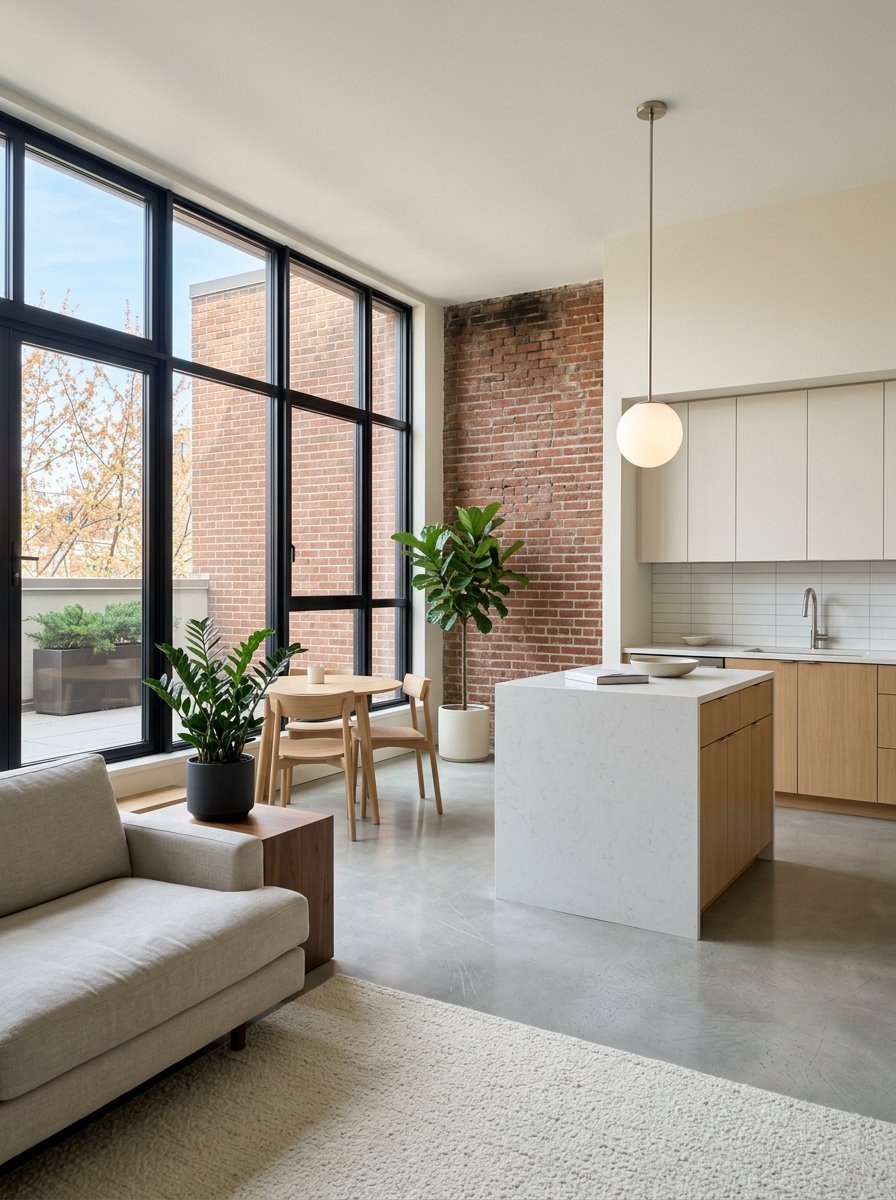
- Adaptive-reuse lofts and condo conversions are common in the core. Expect exposed brick, tall windows, and warehouse features paired with modern kitchens and baths.
- Newer infill condos and townhomes appear in neighborhoods like Brush Park and Corktown, with contemporary layouts and garage parking.
- Larger historic homes exist within reach of the core in adjacent neighborhoods. Condition and pricing vary more widely than in Ann Arbor, so unit-level due diligence is key.
You will find a broader range of product types and price points in Detroit’s central neighborhoods, which can be a positive if you want urban living with options.
Inventory dynamics
- Ann Arbor: Favored areas often see low days on market for well-priced listings. Seasonality tied to the university calendar can create sharp competition at certain times of year.
- Detroit Downtown/Midtown: Micro-markets shift with new development and conversion announcements. Some buildings move quickly, while others offer opportunities with longer days on market. Neighborhood-specific comps and a current development pipeline overview will shape your strategy.
Getting around and commuting
Daily commutes
Mean travel times to work reflect local patterns rather than cross-city drives. Ann Arbor averages around 19.9 minutes, while Detroit averages around 24.8 minutes in Census reporting. You can review city-level context via Ann Arbor QuickFacts and Detroit QuickFacts.
Local transit and micromobility help in both cores. In Detroit, central corridors benefit from streetcar and bus options for first and last mile. In Ann Arbor, TheRide network and bike infrastructure support short in-town commutes.
Between the cities
Ann Arbor sits roughly 40 to 45 miles from central Detroit along I‑94. Typical off-peak drive times are about 45 to 60 minutes, with peaks that can extend considerably. If you plan to cross-commute, factor your specific AM and PM windows and try a few test drives.
For car-free trips, the Amtrak Wolverine connects Ann Arbor and Detroit multiple times daily. It works well for occasional workdays in the other city or for meetings that fit the timetable. Explore schedules and stations via Amtrak’s Michigan Services. Regional buses (including airport-oriented options) add flexibility but usually do not replace a car for day-to-day cross-city commuting.
Parking and building logistics
Most downtown buildings in both cities offer assigned or paid parking. If you expect frequent guests or company vehicles, confirm guest parking policies, EV charging access, and garage clearance. In some Detroit loft conversions, surface lots and structured parking differ by building, so align your search with your parking needs early.
Which fits your priorities
Use this quick framework to clarify your fit:
- Choose Ann Arbor if you want a compact, walkable university city with strong cultural programming, lower average commute times inside city limits, and a well-established single-family market. Expect higher baseline prices and tight inventory near downtown.
- Choose Downtown/Midtown Detroit if you want central-city living with a broader range of condos, lofts, and new townhomes, direct access to major cultural institutions and event venues, and a wider spread of price points in the core.
- If you are hybrid or remote, weigh how often you need to be in each city, your tolerance for I‑94 drive times, and your preference for the feel of each core.
Quick scenarios
- Medical professional with on-call duties: Living near your hospital campus often beats a nominally shorter commute. In both cities, prioritize proximity and reliable parking.
- University faculty or researcher: Ann Arbor’s neighborhoods close to campus simplify routines and offer consistent resale demand. Downtown condos can keep you in the heart of events and lectures if you value a car-light week.
- Executive with meetings in both cities: Consider a Detroit core address with easy access to Midtown and Downtown venues and plan occasional Amtrak or timed drives to Ann Arbor. If you value a quieter daily rhythm, a centrally located Ann Arbor condo can work with scheduled trips into Detroit.
Smart next steps
Here is a simple plan to move from curiosity to clarity:
- Map your week. Identify your typical AM and PM windows and test the actual door-to-door times from a few candidate addresses to your office, campus, or hospital.
- Compare total monthly cost. Look at mortgage, HOA, parking, and utilities versus renting for 12 to 24 months while you learn the neighborhood.
- Align building features with your routines. Confirm parking type, storage, guest policies, security, and pet rules.
- Shortlist three neighborhoods in each city. Note your must-haves (walk score, noise profile, access to venues) and nice-to-haves.
- Tour with a dual-market plan. Schedule one focused day in Ann Arbor and one in Midtown/Downtown Detroit. Keep notes on what surprised you in each building and block.
When you are ready to compare specific buildings and blocks, partner with a team that works both markets. Our office pairs hyper-local Detroit expertise with coordinated tours, fresh comps, and integrated services (mortgage, title, relocation, and property management referrals) to remove friction from cross-market moves. If you want a calm, informed path to a great urban home, connect with Maxbroock Detroit.
FAQs
What are typical home prices in Ann Arbor vs. Downtown/Midtown Detroit?
- Ann Arbor’s city-level typical value sits around the upper hundreds of thousands (recently near about $501,000), while Downtown/Midtown Detroit condos and townhomes commonly trade in the roughly $250,000 to $500,000 range depending on building and finishes.
Is it realistic to live in Ann Arbor and work in Downtown Detroit?
- Yes for some roles, especially with flexible hours; the drive is typically about 45 to 60 minutes in normal conditions, and the Amtrak Wolverine offers useful options for occasional trips.
How walkable are Downtown Ann Arbor and Midtown Detroit for daily errands?
- Ann Arbor’s core is highly walkable with most daily needs close by, and Midtown/Downtown Detroit offer very walkable pockets along key corridors, though walkability can drop as you move away from the core.
How competitive is buying near downtown Ann Arbor?
- Inventory can be tight near campus and in historic neighborhoods, with seasonality tied to the academic calendar; well-prepared buyers often move quickly on quality listings.
What types of homes dominate in Detroit’s core neighborhoods?
- You will find adaptive-reuse lofts, condo conversions, and newer infill townhomes and condos, plus historic single-family options in adjacent neighborhoods with wider variation in condition and pricing.
Can one brokerage help me compare both markets and handle logistics?
- Yes; a single point of contact can coordinate tours in both cities, provide current comps, and streamline mortgage, title, and relocation services to keep your move efficient and organized.